


Cognitive Distortions Printable Workbook (Teens & Adults)
Cognitive Distortions Printable Workbook (Teens & Adults)
Couldn't load pickup availability
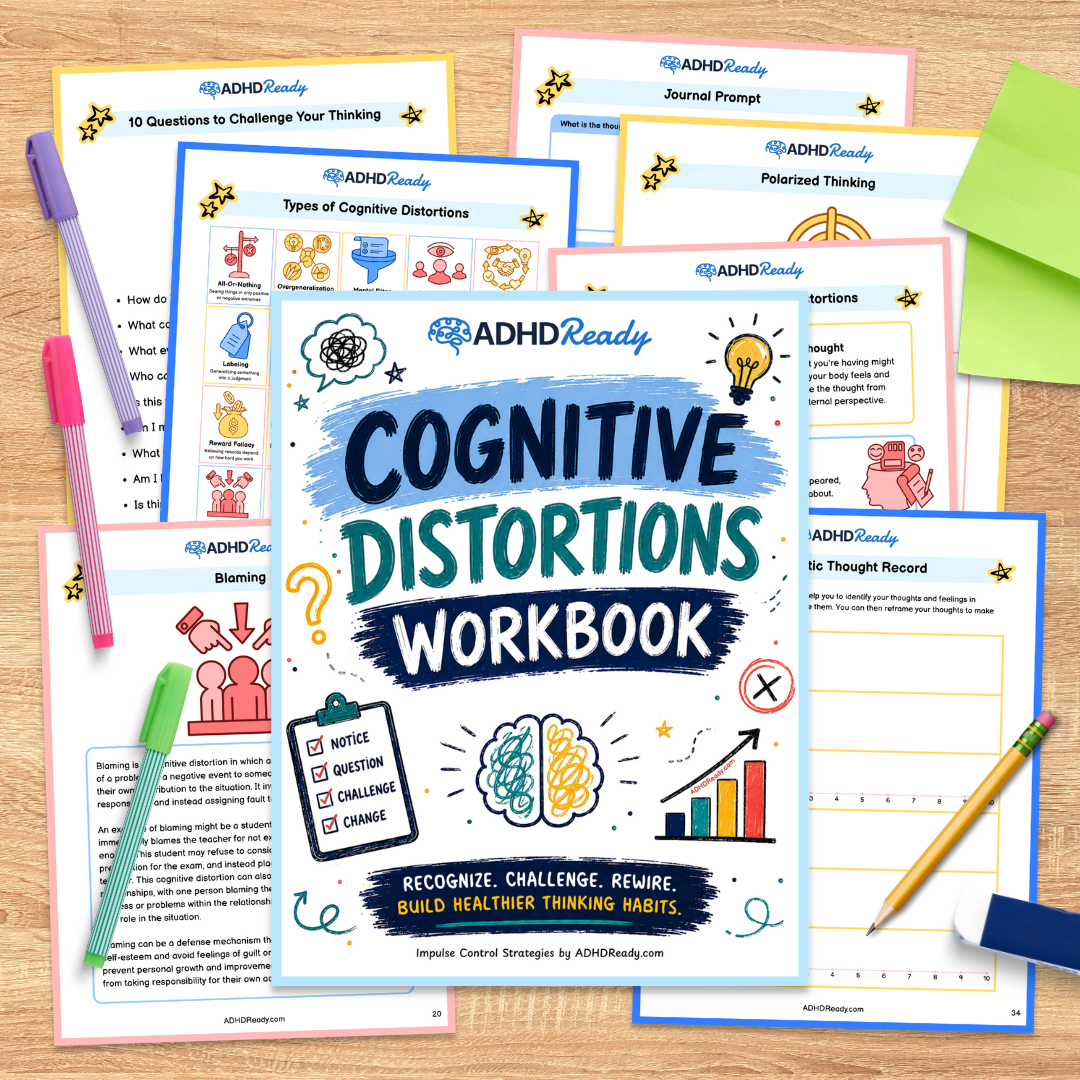
Description
About this printable
This ADHD Ready workbook or tool is for teens and adults. It is designed to identify thinking traps and question automatic thoughts with more balance. There is no single right way to use it. A parent, teacher, counselor, coach, or adult can offer a page as a starting point, while the learner remains part of the conversation.
What is inside
You will find explanations and examples of 25 common cognitive distortions, thought records, guided reflection activities, and journaling prompts. The activities are meant to make an internal experience easier to notice and talk about. They do not ask a child or adult to be perfect. They create a little room to pause, name what is happening, and consider a next step that feels possible.
Try it this week
Record one automatic thought from this week. Name the thinking trap, check the facts, and write a balanced alternative that leaves room for complexity.
Use the pages in order or return to the prompt that fits the day. A supportive adult can read a question aloud, write for a child, or simply listen. Keep the tone collaborative: parent, teacher, and kid are all doing their best. The goal is a useful moment of practice, not a performance.
Instant digital download. Print at home, at school, or in a session, then keep the pages that are useful within reach.
The examples are starting points, not labels for a person. Thinking patterns can shift with context, stress, and support. Use a thought record to become more curious about what the mind is doing and what might help.

